

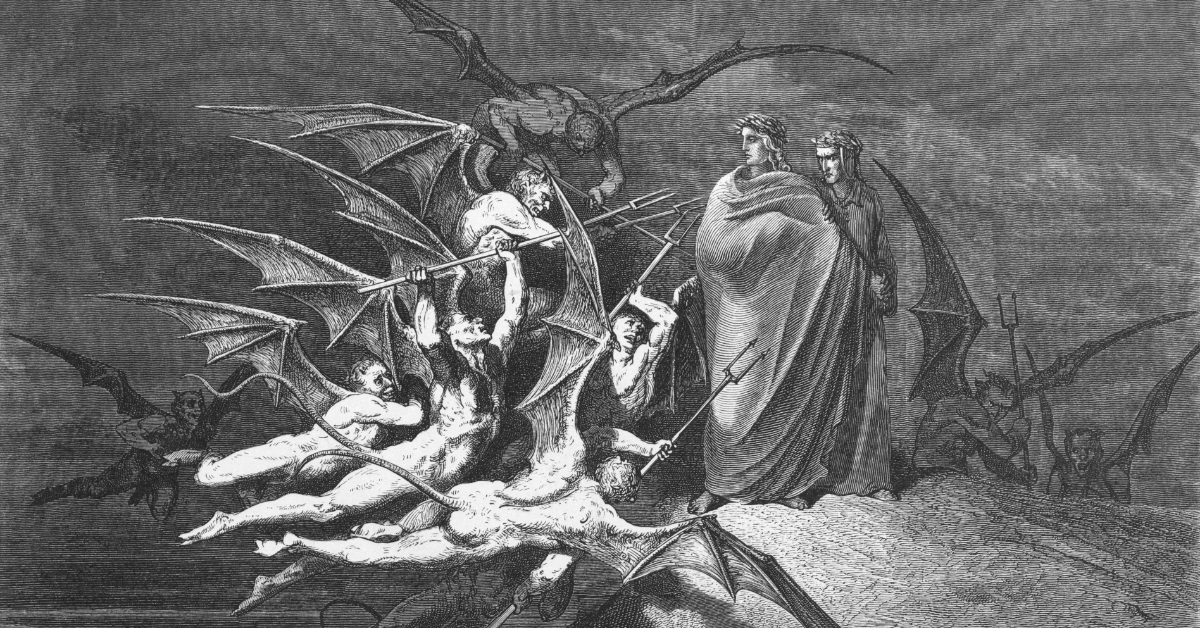
More than 700 years after it was written, Dante Alighieri’s Inferno continues to captivate readers with its vivid imagery, moral insight, and unforgettable lines. As the first part of The Divine Comedy, Inferno follows Dante on a journey through Hell, guided by the Roman poet Virgil, as he encounters souls suffering the consequences of their earthly choices.
Far from being merely a medieval poem about the afterlife, Dante’s Inferno wrestles with timeless questions about justice, human nature, suffering, temptation, and the search for meaning. It is one of the foundational works of Western literature and remains deeply relevant to modern readers.
Here are 10 famous quotes from Dante’s Inferno that still speak powerfully to the modern world.
1. “Abandon every hope, you who enter.”
Perhaps the most famous line from Inferno, these words appear above the gates of Hell.
Dante’s warning is stark and unforgettable. Hell is presented not merely as a place of punishment, but as the complete absence of hope.
For Dante, hope is essential to the human person — without it, there can be no growth, redemption, or future.
2. “In the middle of the journey of our life I came to myself within a dark wood where the straight way was lost.”
These opening lines of Inferno remain some of the most recognisable in world literature.
Dante begins not with triumph, but confusion. Lost in a dark wood, he symbolises the universal human experience of losing direction in life. The phrase “our life” is significant: Dante’s journey is not just personal, but representative of all humanity.
3. “There is no greater sorrow than to recall happiness in times of misery.”
Spoken by Francesca da Rimini in the circle of the lustful, this quote is one of the most emotionally moving moments in Inferno.
Francesca reflects on the pain of remembering joy while suffering loss. Dante recognises the deeply human tendency to dwell on what has been lost — relationships, opportunities, innocence, or peace.
4. “I found myself within a forest dark, for the straightforward pathway had been lost.”
This line comes from the opening of Inferno and captures Dante’s state of spiritual and moral confusion.
The “dark forest” is one of the most famous images in Western literature. It represents the experience of losing one’s way — morally, spiritually, intellectually, or personally. Dante begins his journey not as a hero in command, but as a man who knows he is lost.
5. “Consider your origin: you were not made to live as brutes, but to follow virtue and knowledge.”
These words are spoken by Ulysses (Odysseus), one of the most compelling figures Dante encounters.
The quote reflects one of the central ideas of Western civilisation: human beings are made for more than mere survival or pleasure. Dante presents the pursuit of virtue and wisdom as part of humanity’s highest calling.

6. “Now are our minds like smoke, but we shall soon be like fire.”
This striking image reflects Dante’s fascination with transformation.
Throughout Inferno, souls are shaped by the choices they made in life. Dante suggests that human beings are not static; our habits and desires gradually form who we become.
7. “The more perfect a thing is, the more it feels pleasure and pain.”
Dante understood that human beings experience the world deeply because they possess intellect, emotion, and moral awareness.
This quote recognises that suffering is often connected to our capacity for love, meaning, and joy. To care deeply is also to risk pain.
8. “Pride, envy, and avarice are the sparks that have set hearts on fire.”
Dante identifies three destructive forces that corrupt individuals and societies alike.
The quote feels remarkably modern. Pride, envy, and greed continue to shape politics, workplaces, relationships, and online culture. Dante recognised that many external conflicts begin as internal moral struggles.
9. “I did not die, and yet I lost life’s breath.”
Dante often uses paradox to describe moments of fear, grief, and spiritual crisis.
This line expresses the feeling of being emotionally overwhelmed — alive physically, yet emptied internally. It reflects the profound psychological depth of Inferno, which is one reason the poem still resonates with modern audiences.
10. “Love, that excuses no one loved from loving.”
This famous line appears during Francesca da Rimini’s tragic account of forbidden love.
Dante explores love throughout The Divine Comedy, presenting it as one of the most powerful forces in human life. In Inferno, however, love can become distorted when separated from reason and virtue.