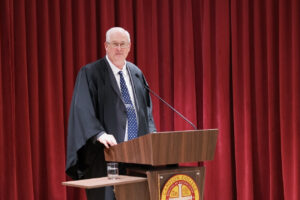

Rebuilding the University: Ben Crocker Reflects on Education and Renewal
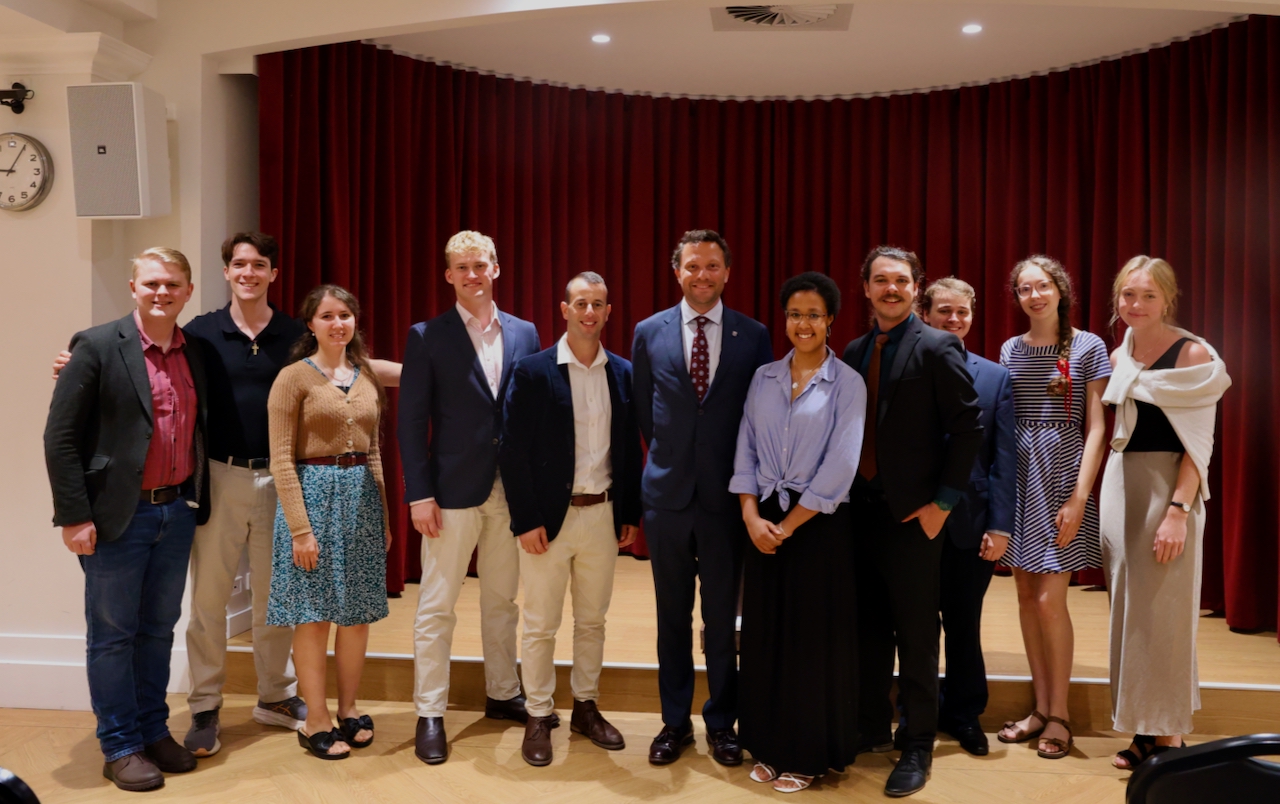
Campion College welcomed Ben Crocker, University Dean at the University of Austin (UATX), for a public lecture on 25 March examining the state of higher education and the case for its renewal. Drawing on his work in the United States and his own Australian background, Crocker offered a wide-ranging reflection on what he described as a moment of “revolution” in the life of the modern university.
Framing his argument through the political philosophy of John Locke and the American founding, Crocker explored the idea of a “right of revolution” as it might apply to education. Just as political authority can lose its legitimacy, he argued, so too can institutions of learning. In his view, many contemporary universities have failed in their core purpose: the formation of students in truth, intellectual freedom, and responsible citizenship.
Rather than offering a technical account of institutional reform, Crocker focused on what he called the “spirit” of renewal. He outlined a series of concerns about modern higher education, including constraints on free inquiry, the expansion of administrative structures, declining academic standards, and a loss of confidence in the intellectual and cultural traditions that universities were once established to preserve and examine.
At the heart of his critique was a deeper claim about the nature of education itself. Universities, he suggested, have increasingly prioritised the transmission of information over the formation of the whole person. This shift, he argued, has contributed to a broader loss of intellectual and spiritual depth among students.
In contrast, Crocker presented the University of Austin as an attempt to recover an older understanding of higher education. Founded in 2021, UATX seeks to combine a liberal arts curriculum grounded in the great works of the Western tradition with a commitment to intellectual freedom and rigorous teaching. Its model emphasises small-group instruction, merit-based admissions, and a renewed focus on teaching excellence.
Crocker described this approach not as a radical break with the past, but as a form of restoration. Invoking the American Revolution as a model, he argued that meaningful reform should preserve what is enduring and valuable while addressing genuine institutional failures. “We are not trying to invent something entirely new,” he suggested, but to rebuild on sound foundations.
The lecture concluded by turning to the purpose of such an educational renewal. For Crocker, universities play a decisive role in forming those who will shape public life – whether in politics, education, business, or the family. If those institutions fail, the consequences extend far beyond the classroom. The task, therefore, is not simply to reform universities, but to cultivate a generation capable of thoughtful leadership and service.
A lively question-and-answer session followed, with students engaging Crocker on issues including political neutrality in universities, the formation of virtue, and the relationship between higher education and school-level reform. In response, Crocker emphasised the importance of intellectual conviction, the role of personal example in education, and the need to rebuild institutions that can sustain genuine academic communities.
Closing the evening, Dr Morrissey thanked Crocker for a lecture that was both “stimulating and rich”, noting its relevance to Campion College’s own mission and to wider conversations about the future of higher education in Australia.
See below for the lecture recording.