


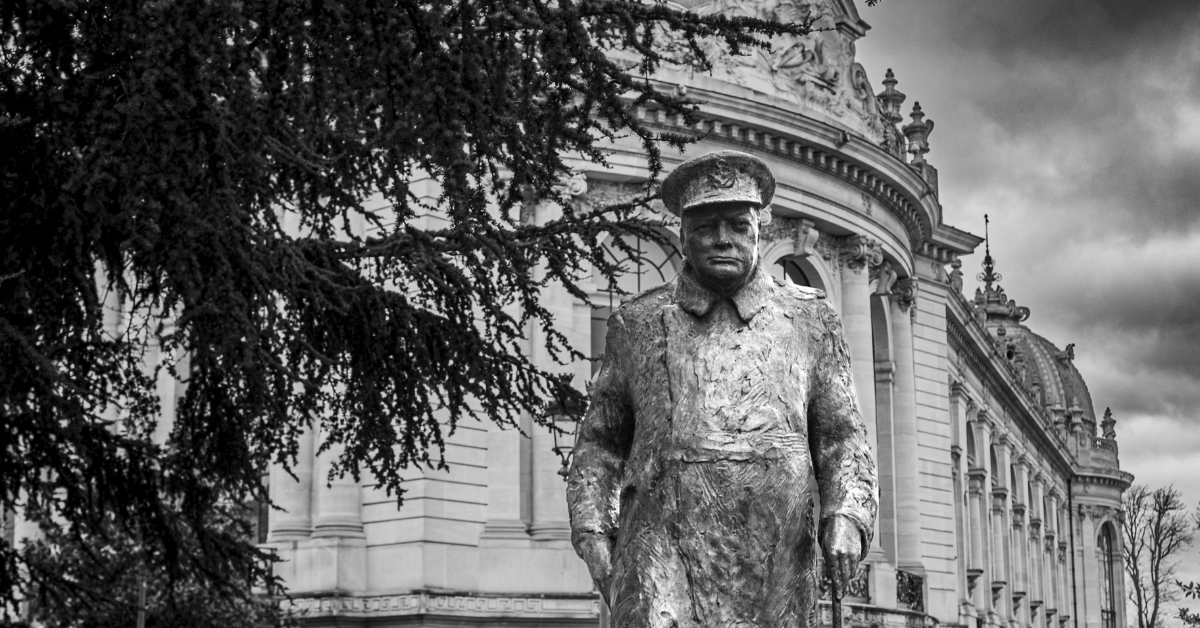
“The farther back you can look, the farther forward you are likely to see.” — Winston Churchill
History is filled with great leaders who shaped nations, won wars, and navigated crises – but few did so without looking to the past for guidance. Whether in politics, business, or diplomacy, those who understand history gain wisdom, foresight, and strategic thinking that set them apart.
This post explores five key reasons why historical knowledge is essential for leadership, along with examples of great figures who used history to make better decisions. Because those who fail to learn from the past, as the saying goes, are doomed to repeat it.
1. Studying History Teaches Strategic Thinking
Great leaders don’t just react to events – they anticipate them. By studying history, they recognize patterns of conflict, diplomacy, and power, allowing them to make informed decisions.
Take, for example, Winston Churchill. Before leading Britain through World War II, he studied Napoleon’s failed invasion of Russia (1812) and Germany’s strategic mistakes in World War I. Churchill understood that overextension and underestimating one’s enemy could be fatal.
His historical knowledge shaped Britain’s approach to the war, including the importance of alliances, supply lines, and morale. He also foresaw the dangers of Soviet expansion, warning of the Iron Curtain long before the Cold War began.
Takeaway: Leaders who study history can predict challenges, avoid repeating mistakes, and make calculated decisions rather than acting blindly.
2. Studying History Builds Crisis Management Skills
No leader operates without crises – wars, economic downturns, and political upheavals are inevitable. But those who study history can respond with insight rather than panic, learning from past successes and failures to make better decisions under pressure.
Take, for example, John F. Kennedy. During the Cuban Missile Crisis (1962), he faced the threat of nuclear war between the United States and the Soviet Union. Rather than rushing into military action, Kennedy reflected on the failures of World War I, where rigid alliances and hasty decisions had escalated a regional conflict into a global catastrophe. Determined to avoid a similar mistake, he pursued diplomacy, negotiation, and strategic patience, ultimately reaching a peaceful resolution.
Takeaway: Crisis leadership requires calm, perspective, and wisdom – qualities that history cultivates by showing leaders how others have faced (and sometimes mishandled) high-stakes situations.
3. Studying History Helps Leaders Navigate Change
The world is constantly evolving – politically, technologically, and socially. Leaders who understand how past societies adapted (or failed to adapt) to change can better guide their own nations and organizations through uncertain times.
Take, for example, Deng Xiaoping. As China’s leader in the 1970s, he faced the challenge of a struggling economy under rigid communist policies. Instead of clinging to ideology, Deng studied the economic history of the West, recognizing how market-driven economies had led to growth and innovation. By introducing economic reforms inspired by historical precedent, he transformed China into one of the world’s leading economies while maintaining political stability.
Takeaway: Change is inevitable, but history shows how leaders can either embrace transformation or resist it at their own peril. Those who understand the past are better equipped to shape the future.
4. Studying History Strengthens Communication & Persuasion
Great leaders don’t just make decisions – they inspire, persuade, and rally people behind a vision. A strong grasp of history provides powerful examples, analogies, and lessons that make speeches and arguments more compelling.
Take, for example, Theodore Roosevelt. A devoted student of history, Roosevelt frequently referenced past empires, leaders, and military strategies to justify his policies. Whether promoting naval expansion by citing British sea power or using ancient Rome as a model for civic duty, he framed contemporary issues through the lens of historical precedent. His ability to connect the past to the present gave his leadership credibility and resonance.
Takeaway: Leaders who understand history communicate with greater authority – they don’t just argue for change, they show why it matters by placing it in a historical context.
5. Studying History Can Help Prevent Costly Mistakes
Many of history’s greatest disasters happened because leaders ignored the past. Studying history helps prevent repeating failures, offering lessons in diplomacy, warfare, and governance.
Take, for example, the Iraq War (2003). Some historians and policymakers have drawn comparisons to the Vietnam War, noting similarities in the challenges of prolonged military occupation and nation-building. Vietnam had shown the difficulties of fighting an insurgency without clear objectives, and Iraq, too, became a complex and costly conflict. While debates continue over the decisions made, history suggests that studying past wars can offer valuable insights into the risks and long-term consequences of intervention.
Takeaway: Leaders who fail to learn from history risk repeating its worst mistakes. Understanding past failures is just as important as studying past successes.
Conclusion: Leading with Historical Wisdom
The best leaders don’t just react to events – they anticipate, adapt, and learn from the past. Whether in politics, business, or global affairs, historical awareness separates great leaders from reckless ones.
Studying history provides strategic thinking, crisis management skills, ethical guidance, and the ability to communicate with impact. Those who ignore it often repeat the failures of those before them.
Understanding history is the first step to understanding ourselves.
Want to develop a leader’s mindset? A liberal arts education at Campion College offers the historical depth that every future leader needs.