

Some Shakespearean characters struggle with guilt. Richard III treats villainy like performance art.
From the opening moments of the play, Richard speaks directly to the audience with such intelligence, humour, and confidence that we are pulled into his schemes almost against our better judgement. He lies, manipulates, seduces, and murders — yet remains strangely entertaining throughout.
Part political drama, part dark comedy, Richard III contains some of Shakespeare’s sharpest and most theatrical lines. Much of the play’s enduring fascination lies in watching Richard openly construct himself as a villain while inviting the audience to enjoy the spectacle.
“Now is the winter of our discontent…”
Few Shakespeare openings are as immediately commanding as this one.
Richard begins the play not with hesitation or introspection, but with complete control of the stage. The speech is clever, rhythmic, theatrical, and filled with resentment simmering beneath its confidence.
Before the plot has properly begun, Richard already feels impossible to ignore.
“I am determined to prove a villain.”
One of the most unsettling things about Richard is how self-aware he is.
Unlike many Shakespearean villains, Richard does not gradually descend into corruption. He openly announces his intentions almost immediately, treating villainy as both ambition and entertainment.
There is something disturbingly enjoyable about a character who knows exactly what he is.
“And thus I clothe my naked villainy…”
Throughout the play, Richard constantly performs different versions of himself depending on his audience.
He presents himself as humble, innocent, loyal, religious, grieving — whatever best serves his immediate purpose. Shakespeare turns politics into theatre, with Richard as its most talented actor.
The audience, meanwhile, is allowed backstage.
“Conscience is but a word that cowards use.”
Richard says the kinds of things most villains try to hide.
He dismisses morality with such confidence that the line almost becomes funny before its brutality properly registers. Part of what makes Richard so compelling is that he strips away the usual social performances around goodness and virtue.
He treats power as a game won by those willing to abandon restraint.
“Was ever woman in this humour woo’d? Was ever woman in this humour won?”
The seduction of Lady Anne remains one of the most shocking scenes Shakespeare ever wrote.
Richard successfully woos a woman beside the coffin of the man he murdered — and then immediately turns to the audience in disbelief at his own success.
The scene is horrifying, theatrical, darkly comic, and strangely charismatic all at once.

“Why, I can smile, and murder whiles I smile.”
Richard understands performance better than almost anyone in Shakespeare.
Again and again, he hides violence beneath charm, politeness, and theatrical self-control. Much of the tension in the play comes from watching other characters fail to recognise what the audience already knows.
Richard is always acting — and enjoying it.
“The world is grown so bad, that wrens make prey where eagles dare not perch.”
Even Richard’s view of power feels theatrical.
The play is filled with images of predation, weakness, ambition, and political instability. Richard sees the world not as moral or just, but as something dominated by manipulation and opportunism.
His cynicism gives the play much of its dark energy.
“A horse! A horse! My kingdom for a horse!”
One of the most famous lines in Shakespeare arrives at the exact moment Richard loses control.
After an entire play spent manipulating others with absolute confidence, Richard suddenly becomes desperate, exposed, and frighteningly human. The theatrical mastermind is reduced to panic on the battlefield.
The line endures because of how abruptly power collapses.
“I have set my life upon a cast, and I will stand the hazard of the die.”
Even facing defeat, Richard remains theatrical to the end.
The language of gambling feels appropriate for a character who has treated politics, loyalty, and human life like pieces in a game. Richard pushes forward not because he believes he is morally right, but because he refuses to stop performing his role.
The momentum of the play becomes impossible to separate from the momentum of Richard himself.
“Despair and die!”
For all his charisma, wit, and theatrical brilliance, Richard ultimately leaves destruction everywhere around him.
The energy that once felt entertaining becomes increasingly dark and unstable as the consequences of his ambition accumulate. Shakespeare allows the audience to enjoy Richard’s intelligence and performance, but never lets them escape the damage he causes.
That tension is part of what makes the play so compelling.
Explore our Shakespeare Quote Series: Hamlet, Richard III, The Tempest, Twelfth Night, and Much Ado About Nothing.
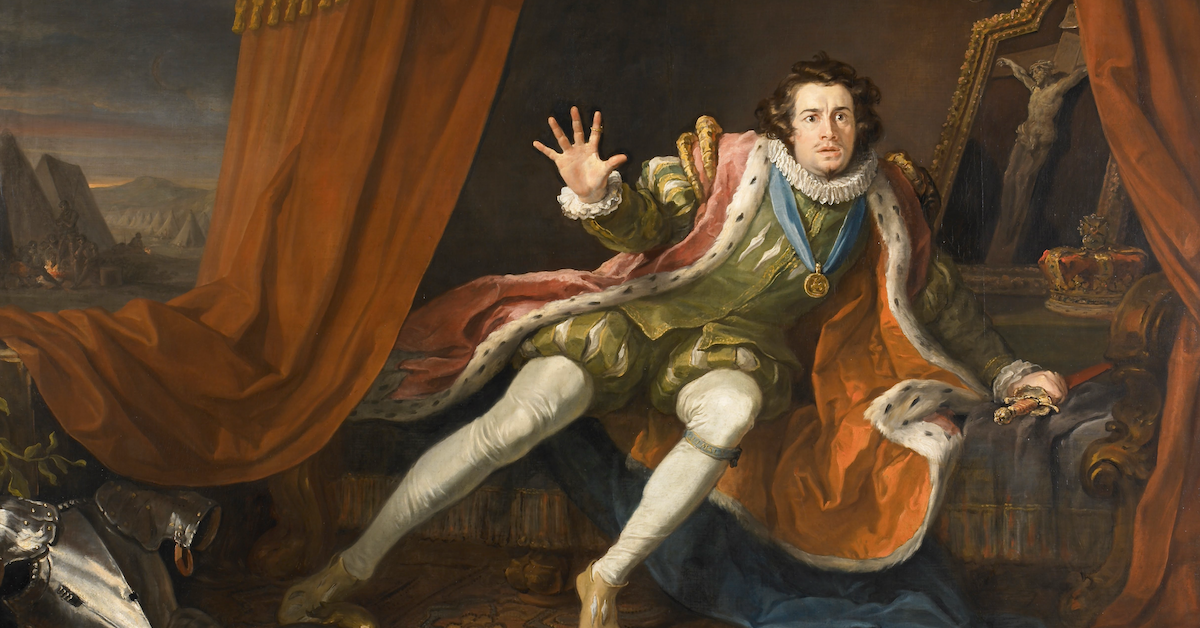
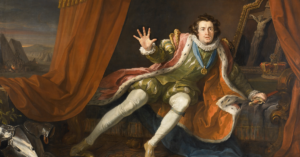
Featured image: David Garrick as Richard III, by William Hogarth.